


Why Is Your Digital Transformation Moving Too Slowly?
Jan 08 ,2026 - min readMany enterprises today have a clear digital strategy, strong leadership commitment, and the budgets to support transformation. Yet internal digitalization still moves slowly. Approval chains remain manual, procurement workflows get stuck, and new system requirements wait months in the IT queue.
In a business environment where market conditions shift weekly, this delay is more than an inconvenience. It becomes an operational risk.
The Execution Gap
The root problem is a structural mismatch between business demand and technology delivery.
Business operations need solutions immediately to fix real problems.
Traditional development requires long cycles of scoping, coding, testing, and deployment.
This mismatch creates the Execution Gap. When IT cannot deliver fast enough, business teams are forced to choose between:
-
Keeping manual processes alive through spreadsheets and email
-
Buying siloed tools that do not fully fit their internal workflow
Both choices slow execution, create data fragmentation, and limit agility.

Why Traditional Approaches Cannot Keep Up
1. Custom Development Is Too Slow
Custom code offers flexibility but requires heavy engineering effort. A procurement approval module or supplier onboarding workflow can take six to twelve months to build. By the time the system goes live, the process may already have evolved.
2. Off-the-Shelf Systems Are Too Rigid
Standard SaaS tools solve only the generic parts of a workflow. They force enterprises to adjust their internal process to the software, which often removes unique competitive advantages. Over time, organizations accumulate dozens of tools that do not communicate well with one another.
This is why enterprises are looking for a new operational layer that is fast, flexible, and aligned with their real processes.
Enter LCAP: The Enterprise Low Code Application Platform
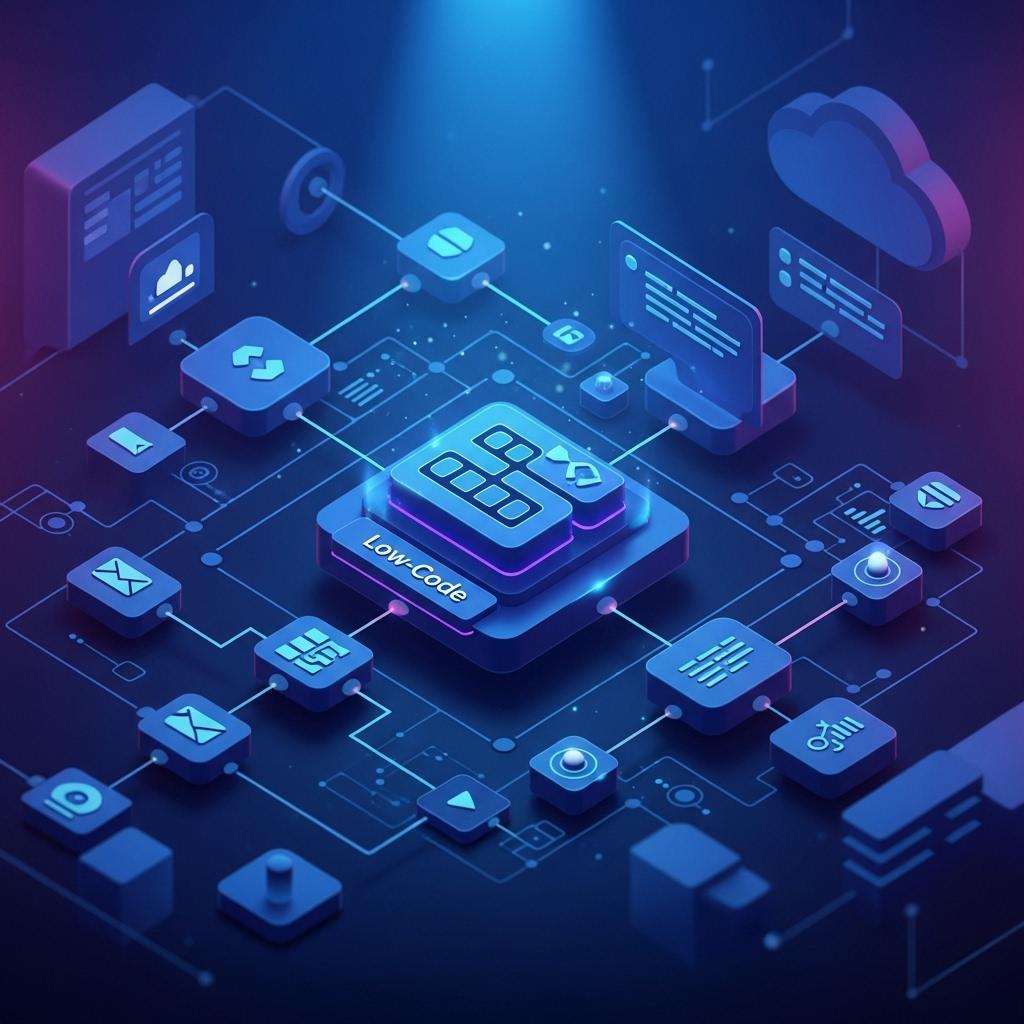
LCAP is not the simple drag and drop builder many imagine. Modern enterprise-grade LCAP acts as a system orchestration layer that lets organizations build, adapt, and scale workflows without waiting months for development.
LCAP provides a middle path between rigid off-the-shelf software and slow custom coding, allowing enterprises to:
-
Model business logic visually
-
Configure rules and data structures without rewriting code
-
Deploy new workflows in weeks instead of months
In short, LCAP closes the Execution Gap by giving operations and IT a shared environment to build systems faster.
How LCAP Accelerates Operational Transformation
1. Software That Fits Your Process
Instead of adjusting your workflow to a tool, LCAP allows you to shape the system to match your real operations. Approval routes, conditional logic, data validations, SLA rules, and exception handling all become configurations instead of coding projects.
2. Real-Time Iteration
If a workflow needs refinement, LCAP allows rapid adjustments without breaking the entire system. Enterprises can run continuous improvement loops, adapting digital workflows at the same pace as business decisions.
3. Unified Operational Data
Most delays in operations come from fragmented information. LCAP connects ERP, CRM, finance, procurement, and supply chain systems into a unified process layer. Teams get a single operational view instead of managing data across emails, spreadsheets, and disconnected apps.
4. Speed as a Strategic Advantage
The real value of LCAP is speed. When a COO or CIO can convert a new process into a digital workflow within weeks, the organization operates with significantly higher agility. Teams respond faster to market changes, supply chain disruptions, and regulatory updates.

The Strategic Shift for 2026 and Beyond
The core competitive question is changing.
It is no longer “Can we digitize this?”
It is “How fast can we digitize this, and how fast can we change it again?”
Companies that rely only on traditional coding will continue to struggle with long release cycles. Companies that depend entirely on packaged software will face process lock-in.
Organizations adopting LCAP as their operational engine will move faster, reduce bottlenecks, and unlock a new level of enterprise agility.
Conclusion
Digital transformation moves slowly, not because leaders lack vision, but because the traditional system-building model cannot keep up with the pace of modern business.
LCAP closes the Execution Gap by giving enterprises a faster, more adaptive, and more integrated way to build processes. With LCAP, operations teams stop waiting for development cycles and start shaping their digital workflows continuously.
The organizations that embrace this shift will set the standard for operational excellence in the next decade.


