


Build vs. Buy: Why Off the Shelf Software Limits Your Agility
When every enterprise uses the same SaaS tools, operations quietly converge and real differentiation erodes. This article explains why off the shelf software limits agility and how an enterprise low code platform helps organizations buy commodity capabilities while building the core workflows that protect their competitive edge.
Jan 20 ,2026 - min readFor decades, CIOs and business leaders have treated technology decisions as a simple binary. The organization either buys off the shelf software and accepts its constraints, or commissions fully custom systems and accepts the cost and risk.
Most enterprises chose to buy. Large ERP suites, CRM platforms, and vertical SaaS became the default answer to almost every operational problem. The expectation was clear: plug in the software, adopt the standard process, and operational headaches will disappear.
By 2025, the limits of this approach are visible. When everyone buys the same tools in roughly the same way, operational processes quietly converge and real differentiation begins to fade.
This is the hidden cost of the traditional “buy first” mindset.
The Vanilla Trap: When Best Practices Make You Average
Off the shelf software is designed for the average user in a broad market. Vendors study hundreds of customers and ship a standard, stable process that works reasonably well for most organizations.
This model is ideal for generic capabilities such as:
-
General accounting and financial posting
-
Core HR administration and payroll
-
Email, calendar, chat, and video conferencing
-
Basic sales pipeline and contact management
These are important functions, but they rarely decide who wins an industry.
The challenge appears in the remaining space, where the organization’s differentiation actually lives:
-
Pricing logic that reflects local markets, segmentation, and risk appetite
-
Supply chain routing that balances cost, speed, and volatility
-
Customer onboarding flows that reflect compliance, risk, and brand promise
-
Claims or case handling rules that express the company’s view of fairness and speed
This is the operational “secret sauce.” It is the set of processes that competitors cannot see from the outside, but feel through response times, reliability, flexibility, and service quality.
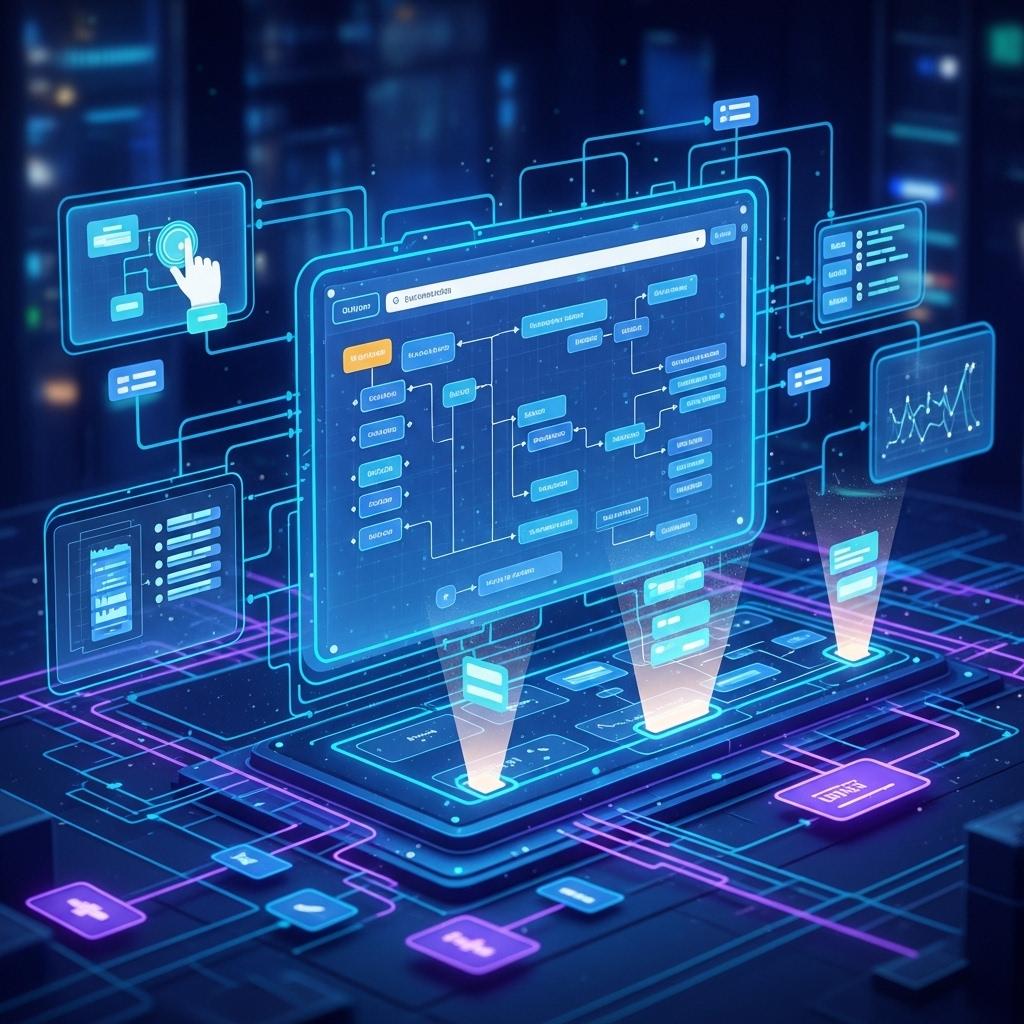
When this unique 20 to 30 percent is forced into a rigid SaaS template, two predictable outcomes emerge.
Process Erosion
Over time, teams stop doing the distinctive things that made the organization stand out, simply because the system does not support them.
A nuanced discount structure gets replaced by a handful of standard fields.
A carefully tuned multi step approval flow becomes a single generic stage.
Exception handling that used to rely on expert judgment gets compressed into a simple checkbox.
The system becomes the boundary of what is possible. Strategy quietly adapts to software, rather than software expressing strategy.
Workaround Hell
Alternatively, teams decide to preserve their real way of working outside the official system.
-
Side spreadsheets track the special pricing rules.
-
Shared folders contain parallel checklists and tracking files.
-
Messaging channels carry “unofficial” updates to compensate for what the system cannot reflect.
From a distance, dashboards still look clean. In practice, critical parts of the process run outside governed platforms. Data integrity suffers, audit trails fracture, and no one is completely sure what the real “source of truth” is.
The organization pays for an enterprise platform, then rebuilds key workflows in shadow tools because the platform cannot keep up with reality.
Low Code as the Third Option: From Binary to “Build Fast”
The classic build versus buy framing assumes a hard choice:
-
Buying is fast, but generic.
-
Building is precise, but slow and expensive.
Enterprise low code platforms introduce a third option. They allow organizations to build fast, with a high degree of fit, on top of existing systems.
A mature low code platform brings two complementary qualities.
Fit comparable to custom build
-
Data models, workflows, and screens are shaped around real operations instead of a vendor’s template.
-
Logic can encode business rules that are specific to a region, a product line, or a risk profile.
Speed similar to packaged software
-
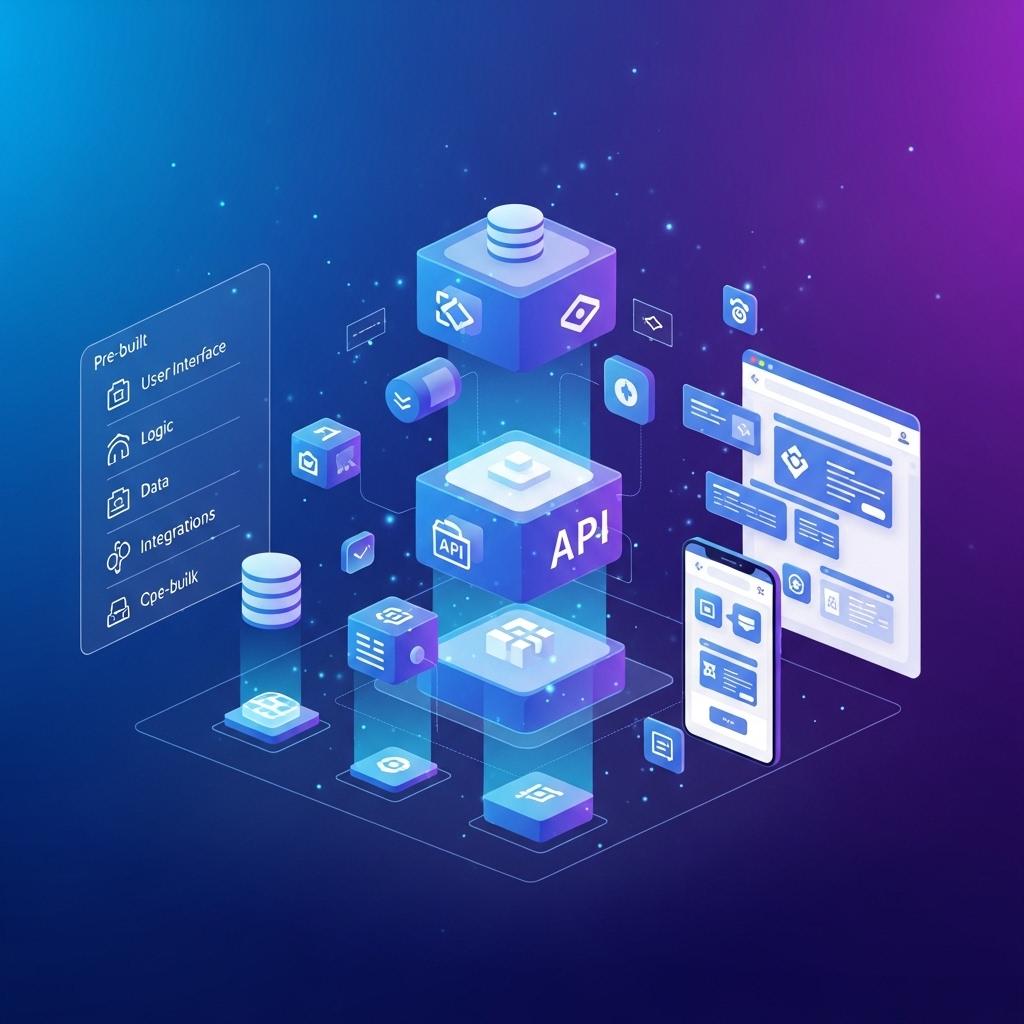
Teams assemble applications from pre built components such as forms, lists, approvals, integrations, and identity management.
-
Time to value is measured in weeks instead of years, because the platform abstracts boilerplate infrastructure work.
This combination supports a composable strategy. The organization no longer has to choose between building everything or buying everything. It can intentionally mix both, based on what is core and what is commodity.
A Better Lens: Commodity vs. Core
The more strategic question is not “build or buy” in general. It is:
Is this capability a commodity utility, or is it part of the core engine that creates competitive advantage?
That lens leads to a simple rule of thumb.

Commodity Capabilities: Buy and Configure
Some processes are essential, but not differentiating. There is no strategic value in having a unique implementation of them, as long as they are reliable, compliant, and efficient.
Typical examples:
-
Standard financial accounting and statutory reporting
-
Payroll calculation and basic HR administration
-
Office productivity and collaboration tools
-
Generic expense claims without strategic nuance
For these domains, using standard SaaS is rational. The market already offers robust solutions. The goal is to configure them safely, integrate them cleanly, and avoid unnecessary customization.
Core Capabilities: Build on Low Code
Core capabilities are different. They directly shape:
-
How the organization acquires, serves, and retains customers
-
How value is created and protected in the supply chain
-
How risk is assessed, accepted, and managed
-
How the brand promise is made real in day to day operations
Examples include:
-
Customized supply chain orchestration for time sensitive or regulated goods
-
Claims and case management flows that balance fraud control and customer experience
-
Vendor or partner onboarding that encodes ESG, compliance, and performance criteria
-
Advisory, pricing, or eligibility engines tied to proprietary models
These are not the areas to hand over to a rigid SaaS roadmap. Here the organization needs:
-
Full transparency into business logic
-
The ability to pilot and iterate new variants quickly
-
Deep integration with internal and external data sources that matter for its specific context
Building these on an enterprise low code platform lets teams digitize and evolve the “secret sauce” without the overhead and fragility of traditional custom development.
Case in Point: Solving the Last Mile
Consider a logistics provider operating in several dense urban regions.
The company uses a standard ERP to manage core financials and high level inventory. These are commodity domains. Buying and integrating established software is sensible here.
However, the real differentiation sits in last mile delivery:
-
Knowledge of local traffic and street patterns
-
Understanding of customer preferences for delivery windows and communication
-
Rules for consolidating stops to reduce fuel consumption and overtime
-
Handling of exceptions such as failed deliveries, address issues, or high priority orders
If the provider relies only on the default route planner bundled with the ERP or generic logistics SaaS, its performance will converge toward every other user of the same system.
Instead, the organization can:
-
Keep the ERP for inventory and billing.
-
Use a low code platform to build a driver and dispatcher application for last mile operations.
This low code application can:
-
Capture real time feedback from drivers about recurring issues at specific locations.
-
Integrate external data such as traffic feeds or weather conditions.
-
Apply custom rules for priority customers or time sensitive shipments.
In effect, the ERP remains the backbone, while the low code layer becomes the brain for the most sensitive part of the service. Competitors can license the same ERP, but they cannot easily replicate the continuously evolving logic embedded in that last mile application.
Technology stops being a constraint and becomes a direct expression of operational strategy.
Do Not Outsource Your Advantage
In an environment where any organization can subscribe to the same suite of SaaS products within days, access to technology no longer defines winners and losers.
What matters is how technology is used and where control is retained.
-
Treat commodity capabilities as utilities. Buy them, integrate them, and keep them stable.
-
Treat core capabilities as strategic assets. Model them explicitly on a platform that the organization controls.
If the operating heart of the business is forced into standard SaaS workflows, the organization is quietly outsourcing the very capabilities that should remain unique.
Enterprise low code platforms offer a practical way out of this trap:
-
They respect existing investments in ERP, CRM, and other systems of record.
-
They provide a governed environment to design, test, and run the workflows that truly differentiate the organization.
The result is a more nuanced posture:
-
Buy what is needed to run.
-
Build, on low code, what is needed to win.
This article sets the strategic foundation for using a low code operating layer. The next step is execution. In the following article, the focus shifts from theory to practice and follows the journey from requirement to live system delivered in weeks rather than quarters.


